
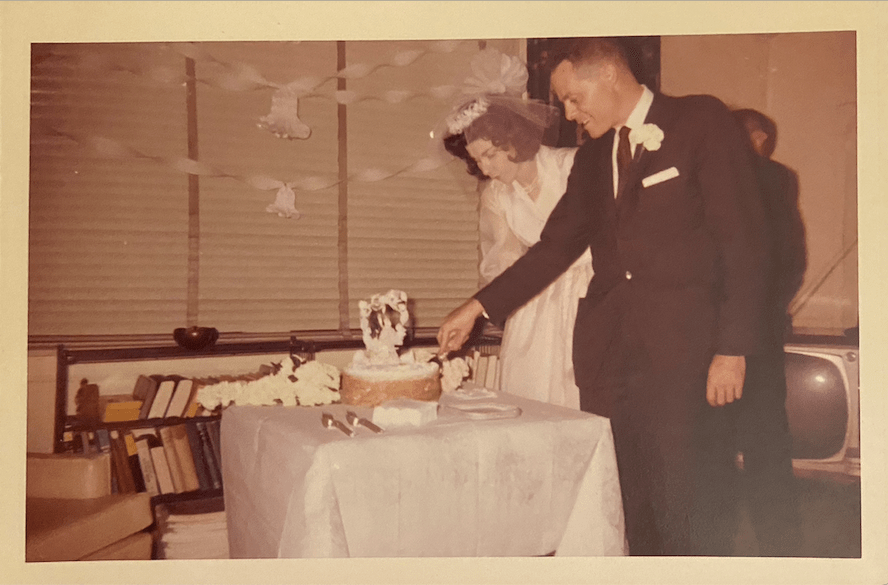
She married young. She was only 19. But she was in love. And it was the 60s. Women married young. Her husband was handsome, charismatic, and talented. And in the 60s, women had children right away. Four children in six years – three girls and then finally, the boy. By all accounts, society smiled on her.
They were good years. Boy, were they good years. She enjoyed looking back on them.
They bought a six-bedroom house in the best midwestern suburb, surrounded by a neighborhood of manicured lawns, multi-car garages, and bikes abandoned in driveways. The ladies often gathered at her house, sipping wine amid bursts of uproarious laughter, while all their kids freely roamed the neighborhood seeking adventure.
Her husband loved to entertain, and parties at their house were the talk of his office and of the town. Based on the stories alone, everyone desired an invitation. There were costume parties: Roaring Twenties, Counter Culture Hippies, Kentucky Derby. There were election day parties filled with vigorous debate over martinis. There were Apollo launching and landing parties. Any excuse for a party.
Yes, they were good years.
For him, these parties drove business for his budding commercial real estate career. For her? She was having the time of her life. Yes, the planning and execution of each party fell on her, but she improved in efficiency and creativity with each celebration and quickly became the neighborhood authority on how to throw the most memorable of parties.
The kids were undemanding. They didn’t get into any trouble. Or any trouble that she knew of. Actually, she had no idea what they were up to when she opened the door in the morning and let them loose. She rarely saw them again until near sundown, whether during the school year or during the summer. But no one had ever called to complain. The school never indicated that they were anything but well-behaved, well-adjusted children.
As her husband grew more and more successful, he spent more and more money on expensive toys for himself, like antique cars and a boat which spent most of its tenure on a trailer in the garage. But he also spent money on her: a necklace with a ruby pendant, a diamond encrusted bracelet, a brand new Zenith color console television. She did like her soaps. The neighborhood favorite was As the World Turns. She loved The Young and the Restless.
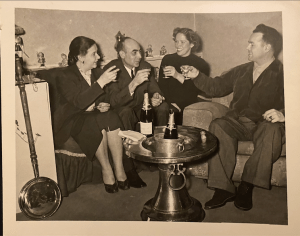
But they weren’t all good years. And she hadn’t forgotten those. She had been pregnant for half of the first seven years of their marriage. And she didn’t do pregnancy well. She lost one of the babies, an anguish she endured privately. And she had at least one child in diapers for nearly eight years. Those were years of baby bottles, croup, doctor visits, middle-of-the-night feedings, cleaning diarrhea and vomit, no sleep, isolation, and Mother’s Little Helper. Those were years when her husband worked day and night, with promises that he would be around more once his business was profitable. Once he could afford to buy his own rental property. Once his business hit annual sales of a million dollars. Once he could afford to hire ten agents to work for him. Once he bought five rental properties. It never ended.
But it was all an investment in her future, in their future, in the future of this family.
So even those difficult years were good years. Until they weren’t.
She had a PTA meeting. Her husband was working late that night. He had a rental property he was considering purchasing. So her children stayed at the neighbor’s house across the street. But the fire alarm had gone off at the school. It was a false alarm, but the fire department would have to come. So everyone was dismissed. She stopped at home to drop off her purse and change out of her dress before fetching the kids. Might as well get comfortable, she thought. Maybe she’d stay over for a drink and some gossip before returning home and starting the long bedtime routine.
He was in their bed with his secretary. She gasped as the woman struggled to cover herself with the sheet, only to expose the nakedness of her husband in the process.
She walked out, of the room and of the house. She went across the street to the house where her kids were hanging out. They were good friends, so she took it upon herself to open the liquor cabinet and grab a bottle of whiskey. In silence, she made two martinis, hers with an extra shot of gin. She handed the other to her friend.
They positioned themselves in chairs in the living room so that they could see the front door across the street, and they waited. A young girl hesitated at the threshold, curious as to why her mother and her friend sat facing the window. But she heard her name called – her friends down in the basement wanted her to hurry back to play – and she ran off.
They soon spotted the woman scrambling out of the house. She poured the rest of her drink down her throat, and, abandoning her children, she returned home to confront her husband, the man she most definitely would be leaving. She hadn’t signed up for this. She wanted out at all costs. And she moved quickly to make that happen.
He had a clever lawyer. She had a paralegal. The house was sold. She received a check. She moved herself and the children into a small house in an adjoining suburb that was not nearly as nice. Her husband bought a larger house than the one they sold, in the nicer neighborhood, and moved the woman, his secretary, in with him.
He married her. He grew his business. He owned ten, twenty, then thirty rental properties and employed fifteen, eighteen, twenty agents buying and selling for his clients. She got a job in a department store, selling bras. Finding a job was not an easy feat for a 35-year-old, uneducated, never-employed single mother of four.

So she married the first man who would have her. He had money. She had declared bankruptcy. He demanded a prenup. He was soon found to be cheating on her too. She worked as a waitress. A receptionist. A telemarketer.
One by one, the kids graduated high school, attended college, got married, and had children of their own. They all landed on their feet.
Then another marriage. This one to an alcoholic.
The young girl from the house across the street, the young girl who watched her mother and her friend sit at the window drinking martinis, had just graduated college. Before leaving town for her first job, she spent the weekend with her childhood friend where she lived with her mother across town. She had been drinking. The alcoholic husband was away on business. The two friends heard her crying alone in her bedroom and peeked in to make sure she was ok. She invited them in, and the three sat on the bed together.
“What’s wrong, Mom?” the daughter asked.
“I miss the life I had with your father. That was my life too. And I want it back,” she declared.
The daughter shrugged her shoulders; she had heard this before. But the young girl was shaken by the confession. When she returned home from her visit, her father asked her to share a quiet dinner with him while her mother was at a church function. As they settled in at the dining room table, he asked about the visit with the old neighbors. They had all been friends at one time, before the divorce.
She relayed the scene from the bedroom, complete with the disheartening admission.
“She wishes she had her old life back.”
Her father mashed down his boiled potatoes with a fork, creating a criss-cross pattern in the flattened food. “She could have had that life; she could have had a great life,” he began without looking up. He picked up the salt shaker and shook it over his potatoes. He did the same with the pepper. “All she had to do was ignore his cheating.” And he lifted a fork full of potatoes to his mouth.
The young girl excused herself from the table, leaving her food untouched. She carried her dishes to the kitchen, dumped the food in the trash, and dutifully rinsed them before placing them in the dishwasher. She walked up the stairs to her bedroom, where she flopped onto her bed, face buried into her pillow. And, knowing it was true, she sobbed.
 The Writing Life